Silver is one of the most beautiful and timeless precious metals. Whether you admire its cool, sleek look in jewelry, its value as an investment, or its charm in home décor, you want to know one thing for certain—is it real? Unfortunately, silver is also one of the most counterfeited metals in the jewelry world. That’s why learning how to tell if silver is real with simple tests is essential, so you can be sure your treasured chain, bracelet, or ring is truly authentic.
Table of Contents
- Why Bother Testing Your Silver?
- The Hallmark Stamp Check
- The Magnet Test
- The Ice Cube Test
- The Sound Test (Ring Test)
- The Rub Test
- The White Cloth Test
- The Nitric Acid Test (Advanced but Effective)
- Combining the Tests for Accuracy
- How to Protect Your Silver Once You Know It’s Real
- Other Styles at Adamans
- Final Thoughts
- FAQs
The good news? You don’t need expensive lab equipment or years of expertise to figure it out. With just a few simple, at-home methods, you can quickly check if your silver is genuine. In this guide, you’ll learn exactly how to tell if silver is real with simple tests—plus, I’ll make sure it’s engaging, easy to follow, and maybe even a little fun.
Why Bother Testing Your Silver?
Before we dive into how to tell if silver is real with simple tests, let’s answer the “why.”
Silver holds value for three main reasons:
Monetary worth – Real sterling silver (92.5% pure silver) commands a much higher price than silver-plated or fake metals.
Durability & quality – Genuine silver lasts for decades, developing a natural patina that adds charm.
Allergy safety – Many cheap fake silvers contain nickel or other metals that can cause skin irritation.
If you’ve bought silver from an unknown source—especially online—or inherited some pieces, it’s worth taking a few minutes to confirm authenticity.
The Hallmark Stamp Check
The first step in how to tell if silver is real with simple tests is the easiest: look for a stamp.
Most genuine silver items will be marked with a purity hallmark, often found on the inside of a ring band, the clasp of a chain, or the underside of a piece.
Common hallmarks include:
925 – Sterling silver (92.5% silver, 7.5% other metals, usually copper)
Sterling – Another mark for sterling silver
800 – 80% silver, common in older European pieces
999 – Fine silver (99.9% pure)
Important note:
A hallmark is not a guarantee—counterfeiters can stamp fake silver too. But if your piece has no markings at all, it’s worth being skeptical.
The Magnet Test
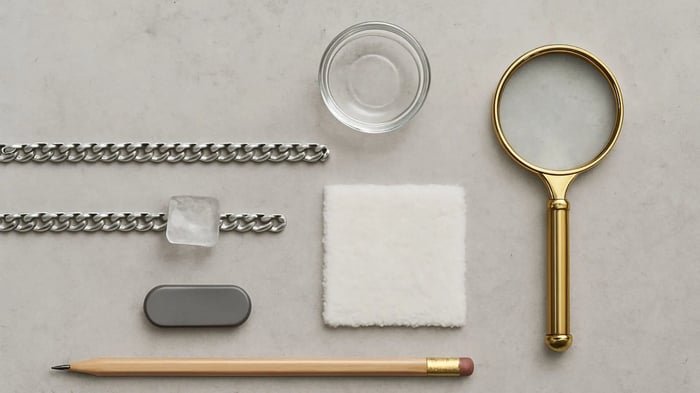
One of the quickest how to tell if silver is real with simple tests is using a simple refrigerator magnet.
Here’s why: silver is non-magnetic. If your silver item is attracted to a magnet, it’s almost certainly not pure silver. It could be steel, nickel, or another magnetic alloy under a silver coating.
How to do it:
Grab a strong magnet (fridge magnets are fine, but a neodymium magnet works best).
Hold it near your silver item.
No attraction? That’s a good sign. Strong pull? Likely fake.
Keep in mind that some fake silvers are made with non-magnetic metals like brass, so this is just one piece of the puzzle.
The Ice Cube Test
This one’s a little science experiment you can do in your kitchen. Silver has one of the highest thermal conductivities of any metal—meaning it transfers heat extremely quickly.
How to tell if silver is real with simple tests using ice:
Place an ice cube directly on the silver item.
If it’s genuine silver, the ice should start melting almost immediately—even faster than it would on your hand or a regular metal surface.
This works because the silver quickly absorbs heat from the surroundings and transfers it to the ice, making it melt faster.
The Sound Test (Ring Test)
Silver produces a distinct sound when tapped—a clear, bell-like “ring” rather than a dull thud.
How to do it:
Hold your silver item loosely by one corner or end.
Gently tap it with a non-abrasive object (like a wooden pencil or another piece of silver).
Listen for a high-pitched, sustained ring.
Coins and flat silverware are easiest to test this way, but even jewelry can produce a telltale tone.
The Rub Test
This is another simple how to tell if silver is real with simple tests trick—using your skin’s natural oils.
Rub the silver item gently between your fingers for 15–20 seconds.
If you notice a black or greenish mark on your skin, it might be fake or have a coating.
Real silver may leave a faint black residue due to oxidation, but it shouldn’t be excessive.
The White Cloth Test
Another old-school method:
Take a clean white cloth.
Rub the silver gently.
Real silver often leaves a slight black mark (tarnish), which is a normal reaction to oxygen and sulfur in the air.
Plated metals or stainless steel usually leave no mark at all.
The Nitric Acid Test (Advanced but Effective)
If you want to be absolutely certain, the nitric acid test is the most definitive at-home method (though it should be done carefully and with gloves).
Steps:
Scratch a tiny, hidden spot on the silver.
Apply a drop of nitric acid.
Real silver will turn a creamy white color; fake silver may turn green (copper) or another color depending on the alloy.
If you’re not comfortable handling acids, a jeweler can do this for you quickly.
Combining the Tests for Accuracy
The smartest way how to tell if silver is real with simple tests works is by combining methods. For example:
Check the hallmark.
Test with a magnet.
Confirm with the ice cube or sound test.
Using multiple checks reduces the chance of being fooled by a well-made fake.
How to Protect Your Silver Once You Know It’s Real
After learning how to tell if silver is real with simple tests, you’ll probably want to keep your genuine silver shining for years to come.
Tips for care:
Store silver in anti-tarnish pouches or cloth.
Avoid exposing it to perfumes, lotions, or chemicals.
Clean it periodically with a silver polishing cloth.
Other Styles at Adamans
Once you’ve mastered how to tell if silver is real with simple tests, you might be ready to explore some truly eye-catching jewelry. At Adamans, we go beyond silver—offering bold, luxurious designs that make a statement.
Moissanite Chains – Brilliant sparkle, incredible durability, and a fraction of the diamond price.
Moissanite Cuban Link Chains – A modern hip-hop staple with unmatched shine.
Moissanite Tennis Chains – Sleek, timeless, and perfect for layering or solo wear.
Moissanite Bracelets – Add subtle shine to your wrist with precision-cut moissanite stones.
Lab Diamond Collection – For the big spenders who still want value, our lab-created diamonds offer identical beauty to natural diamonds—at a far more affordable price.
Whether you love the cool elegance of silver or the fire of moissanite, Adamans has a piece to match your style.
Final Thoughts
Knowing how to tell if silver is real with simple tests isn’t just about protecting your investment—it’s about peace of mind. With a few easy tricks, you can confidently spot the real deal and avoid being duped by plated or imitation metals.
FAQs
1. What is the easiest way to tell if silver is real?
The easiest method is to look for a hallmark stamp like “925” or “Sterling,” then confirm with a quick magnet or ice cube test.
2. Can fake silver have a 925 stamp?
Yes, counterfeiters sometimes stamp fake silver with “925,” so always combine multiple tests to be sure.
3. Does real silver tarnish?
Yes, genuine silver develops tarnish over time due to exposure to air and moisture, which can be polished away easily.
From hallmark checks to ice cube science, these methods are quick, inexpensive, and surprisingly fun. And once you’ve confirmed your silver is authentic, you can wear it with pride—or expand your collection with equally stunning pieces from Adamans.
After all, real style is about knowing what’s genuine—both in jewelry and in life.
5mm Moissanite Tennis Bracelet - 925 Silver - D COLOR - VVS1

$365.99
$639.99
Lifetime Warranty, quality assured for LIFE at Adamans & passes the diamond tester. Our moissanite is industry leading and is completely colorless. Some brands use moissanite that has a slight yellow hue, meaning it's not completely colorless and does not… read more